Thursday, 25 February 2016

Lights, Action!

This week we made fantastic light designs. We challenged the kids to do this using only foil, pipe cleaners and a hand held torch or a string of fairy lights. By constraining the materials available, we forced them to explore the possibilities and limits of what you can do with foil -squish it, mould it, fold it, fan it, puncture it...


When we turned off the lights in the studio, the fun began. There was lots of exploration of the qualities that foil might contribute to the design- whether the light is reflected by it, passing through a space in it or distorted by an edge of it.


A hanging garland with spiralled foil elements creates an attractive chandelier. 


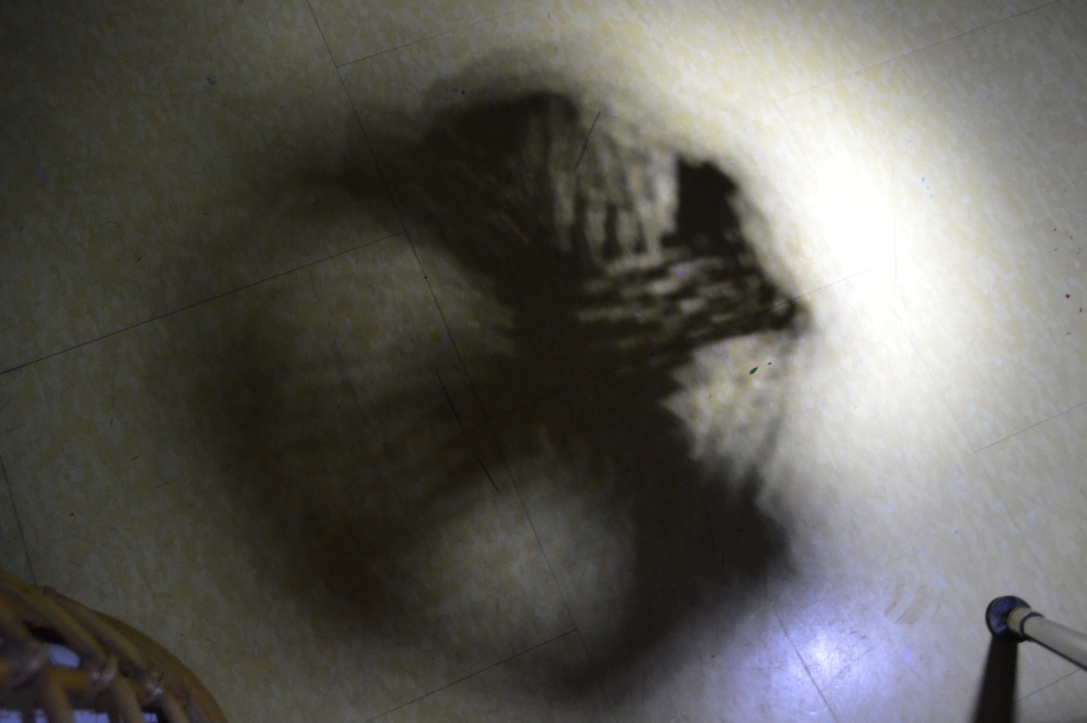
Some of our students made sculptures-moulded with foil-to project interesting shadows.


 Others were entranced by the reflective properties of foil. This design used the light bouncing off a core of foil. The curled pipe-cleaners pop out of the illuminated centre like stamens.


Light sabres were popular of course...


In this case the light shines through some fluorescent paper and the pipe cleaners cast an interesting shadow.


This student noticed that the light itself could be used as a spinning top and started to add elements extending from the side.  Although this idea is not fully developed, this is the kernel of a new design concept: incorporating motion into a light fixture.

Thursday, 18 February 2016

We've got the power!


In this week's fashion challenge, we encouraged wild self expression as we created super hero-popstar outfits. Aesthetics is often an important part of design: so we wanted them to upcycle something good looking! We gave the squad a mixture of vintage garments (from the 70's and 80's of course), other textiles and interesting materials (deflated mylar balloons, faux fur pieces, mesh) and asked them to make a new and theatrical outfit. The emphasis for this class was also on fun- can they make something playful and unexpected? You bet they can!


Many of the kids worked in groups, using fast sketches to merge their ideas. Armed with scissors, colourful duct tape, safety pins and elastics this was an exercise in creative destruction. Sometimes we have to take something apart to design something better. In our fashion remixes we support girl and boy power, drama and individualism.


Girl Power!

Thursday, 11 February 2016

Meet me at the carnival


Roll up! Rollup! It's carnival time at Invention Squad. What better way to beat off the winter blues than to design a great fair game and play it with your friends? This was definitely the funnest, wackiest session yet. We challenged the kids to make a transportable/foldable set-up and to test it by playing it with their friends and parents. This is cardboard prototyping and design by play- a natural for kid experimenters.


This design had a moving element. The girls came up with a spinning ball trap, with cups attached to a central cylinder.


Testing time. This game is trickier than it looks.


This two person game is built like a tray to be carried around one person's neck. Players face one another and compete to get balls into the suspended cups.


  This team decided to go big and built a personal pool table. Loads of action, lots of laughs.

Thursday, 4 February 2016

Picnic time

                                     
It's time for a feast at invention squad!This week, we asked our students to design a transportable food system for an outdoor picnic. This industrial design challenge may seem pedestrian at first sight- especially for those of us who have to scrape leftovers from a school lunchbox every evening. You might think that a picnic basket is just a box with a handle, but in the hands of a set of eager kid inventors there are many interesting possibilities for innovation.


How to make it easy to transport? Could it be eco-friendly? How could we adapt it for special types of food? Could it be multifunctional? Is my lunchbox for a special user? This is a prototype for a future lunchbox. It comes with a remote control, which allows food selection and pops up the appropriate food receptacles on extendable platforms as they are selected. The whole box is mounted on wheels for transportability. 


This picnic hamper includes a music player and has a handsome leather lining! 


This is a portable BBQ unit for picnics.  It includes a removable heating unit (with a solar cell connection), a food storage area, roasting sticks and a carrying strap.


This invention is a feeder for a small monkey. It explores the idea that pets and zoo animals need more stimulation and giving them their food in a climbing nook will make dinnertime into a bit of a game. Old toy parts are remixed to create a colourful playful design with lots of receptacles for snacks.


This design is for outdoor adventurers. The lunch canister is light and straps to the head or the body to leave hands free for climbing and trekking. This inventor considered the portability factor. Nice job!

Thursday, 28 January 2016

Zip away!

In this week's session there were three small design challenges. We built mini zip-mobiles, zip carriers and zip target droppers.

Time to build a zip-mobile. The challenge: make a sturdy structure that will fly down the zip line in less than four seconds using a paperclip, 2 straws, 2 sticks, 2 washers, tape and scissors. To make a device that zips, consider what arrangement will avoid too much friction or drag and think about how your centre of gravity will affect the flight.


Most of the students easily figure out which material should be in contact with the zip line so that the zip-mobile slides quickly. The second challenge: now modify your zip-mobile to make a zip carrier that will transport a ping-pong ball down the zip line. You are given a cup as additional material. 


Our third challenge was a complex design problem. The students are asked to modify their zip carrier to transport a marble down the line and to drop the marble on a target part way down. This has to be done without touching the carrier directly. There are several ways to tackle this challenge, but all involve some serious lateral thinking!

One team tries a remote string release mid flight. In multiple test runs they discover that the release needs to be before the cup is above the target. This helps because the marble is already moving forward along the zip line and moves in a curved trajectory (not a direct line down) once it is released from the cup

Maybe it's better to release the ball from a trap door in the cup rather than using a tipping mechanism? After some experiments with vibrating the carrier mid flight, one group decides to stop the carrier and then pull out a lower release pin (without touching the cup). Ambitious plan.


One student realizes that if she ties a string from the release point to the bottom of the zip-mobile it will tip the cup at a set point and release the marble towards the target. This is an elegant hands-off solution that needs some refining to make it reproducible.

And finally, it's race time. Which designs move faster and why? How does their shape and weight affect their speed? And how do friction and drag slow them down? But most of all, why can't you tell that was not a tie!

Friday, 22 January 2016

Theme park

This week the challenge was to design a multi-age indoor playground to fit inside the towering Canadian malting silo. This building is located on the waterfront just behind the Harbourfront Community Centre. 


Our students may have noticed the outside of this building -which has been given a heritage designation by the city. The inside of the malting silo may be less familiar.


Various plans for this building have emerged over the years. None of them has yet come to fruition.

In planning a playground, we asked our students to think about taking advantage of the verticality of the structure: how could we make the most of all that height?


We started off this challenge with a 2D space planning design.  The indoor floor plan of the silo already suggests a playground with various different areas. Our students instantly think about different types of play areas and how these can accommodate different age groups.


 Next step:  we asked our young designers to build a 3D cardboard prototype on top of their plan.


These boys are brainstorming a survival playground. Even the entrance chute is an adrenaline inducing challenge!


The girls decide to build a nature themed playground and here is the end of the snake mouth slide.


 This design has an indoor garden plot, a small trampoline and a climbing jump tower. It also exploits the location of the malting silo with a water connection to the lake itself (for those brave souls wanting to go for a swim in the lake!)